Wayfinding: Calgary Public Libraries
Goal: Conduct research into the wayfinding experiences of Calgary Public Libraries in order to determine how wayfinding impacts our navigation in public spaces and how it could be improved. Present findings in the form of a booklet.
Tools
InDesign
Year
2021
Course
Foundations of Information Design
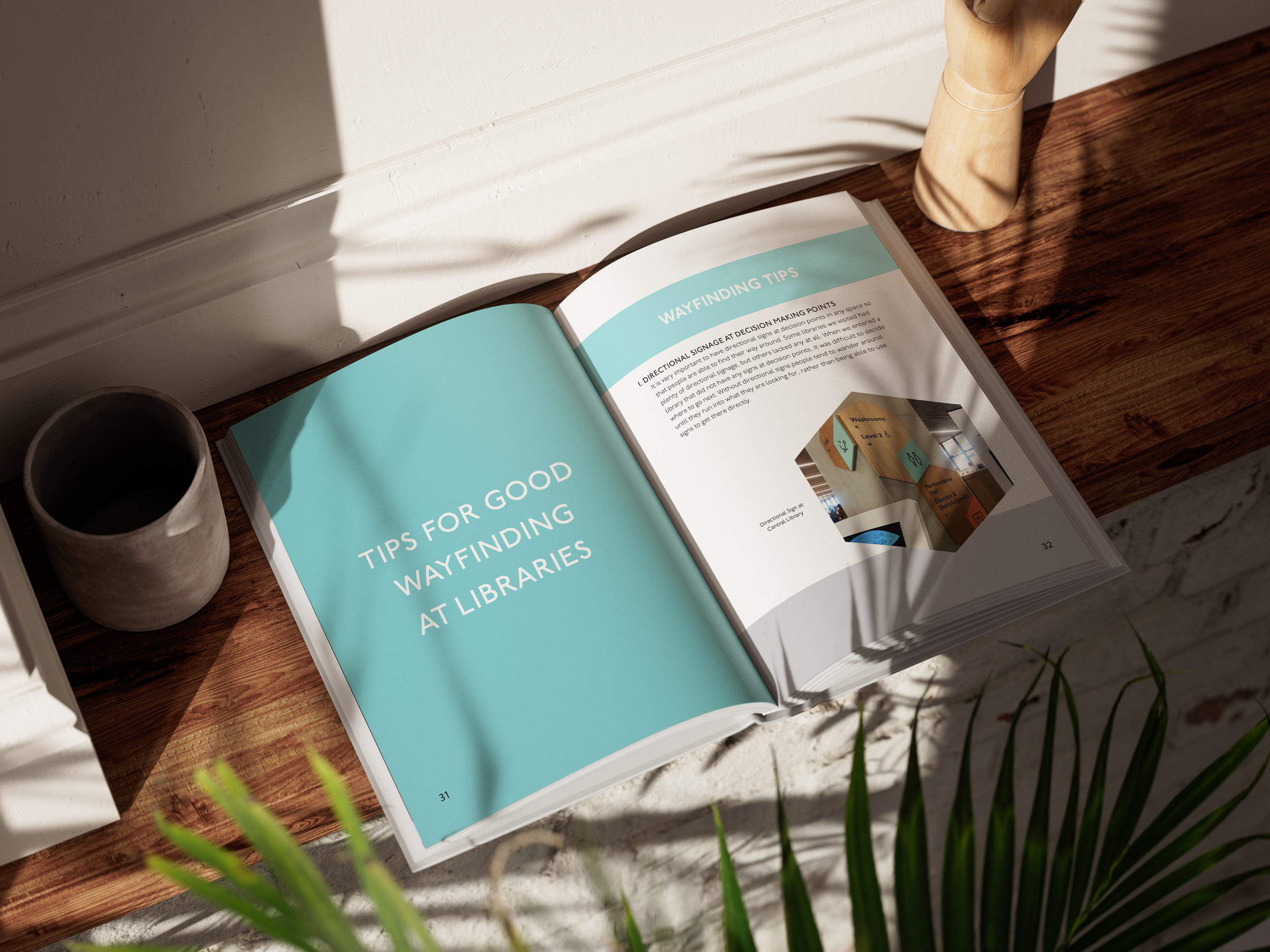
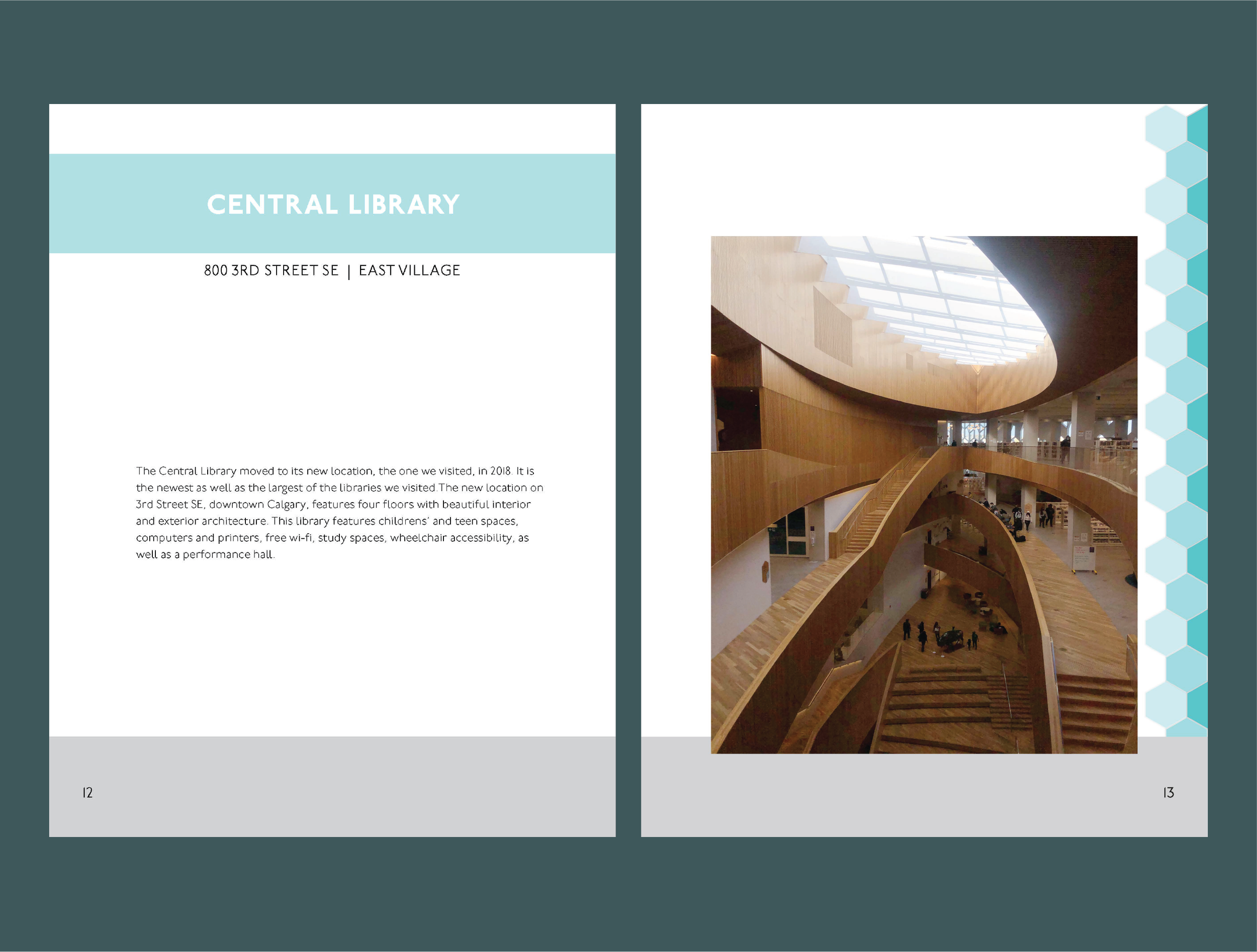

In this project, I worked with a team of my colleagues to analyze the wayfinding capabilities of four different Calgary libraries. We set out to experience what it was like to navigate these spaces, paying close attention to the signage present and the layout of the spaces, and to make insights into what makes good wayfinding and how some of the libraries could improve the ability of visitors to navigate through them. During the time we completed this project most COVID-19 public safety measures were still in place, so our analysis also had a special focus on the impact of COVID-19 on wayfinding.
Design Process
Research:
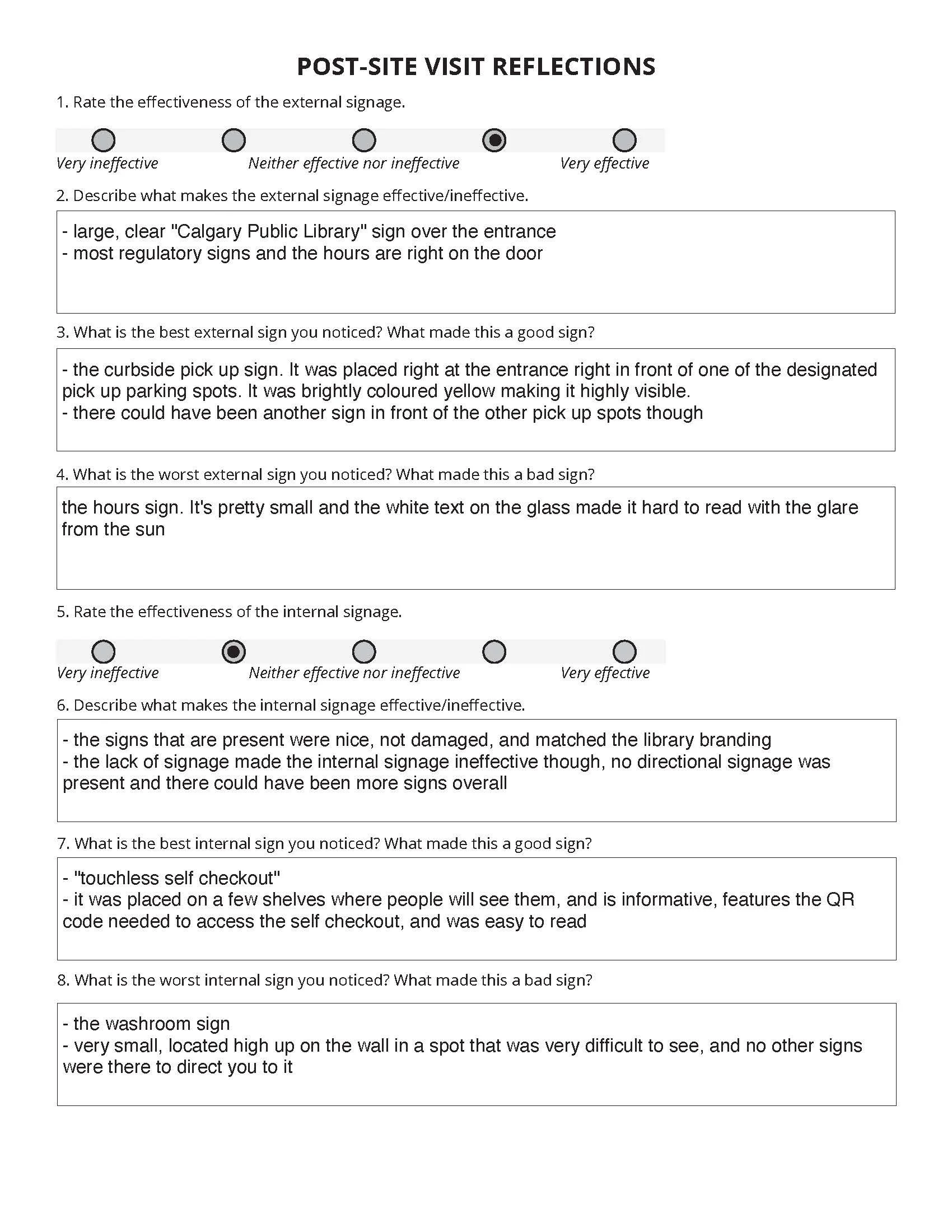
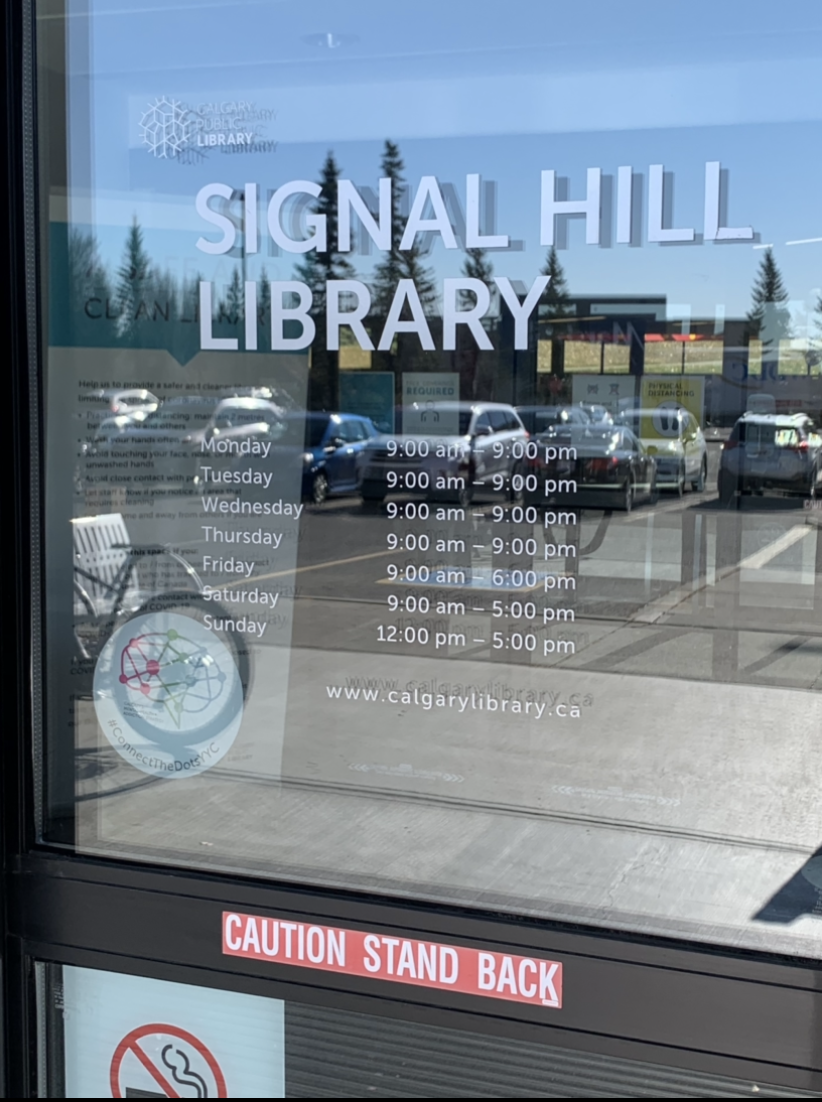
The first step we took in our project was to conduct field research in the form of a site visit to the library we had each chosen to focus on. I visited the Signal Hill Library, while my colleagues visited Central Library, Crowfoot Library, and Memorial Park Library. We each took notes during our visit on what kinds of signage we saw, how effective those signs were, how accessible the layout of the space was, and how COVID-19 safety measures impacted the space. We also observed how other people visiting the libraries used wayfinding tools to navigate the space.
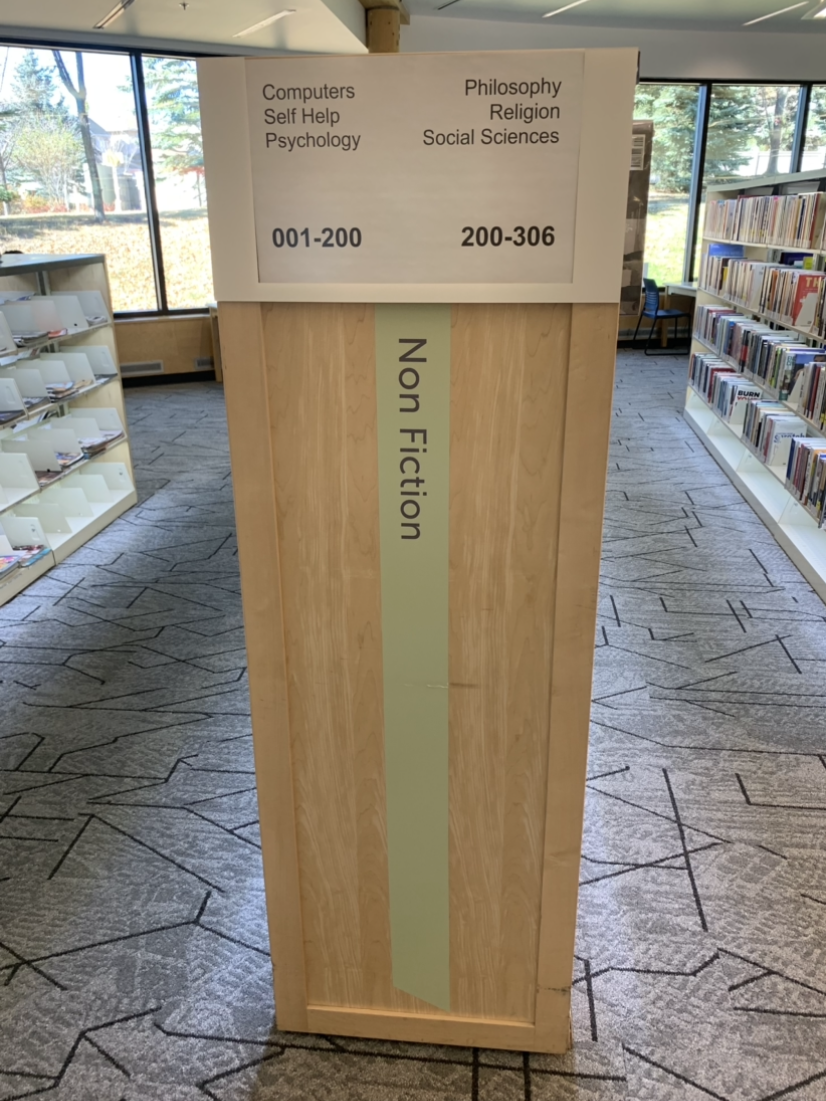
We also made sure to take lots of pictures of the spaces we visited
Analysis:
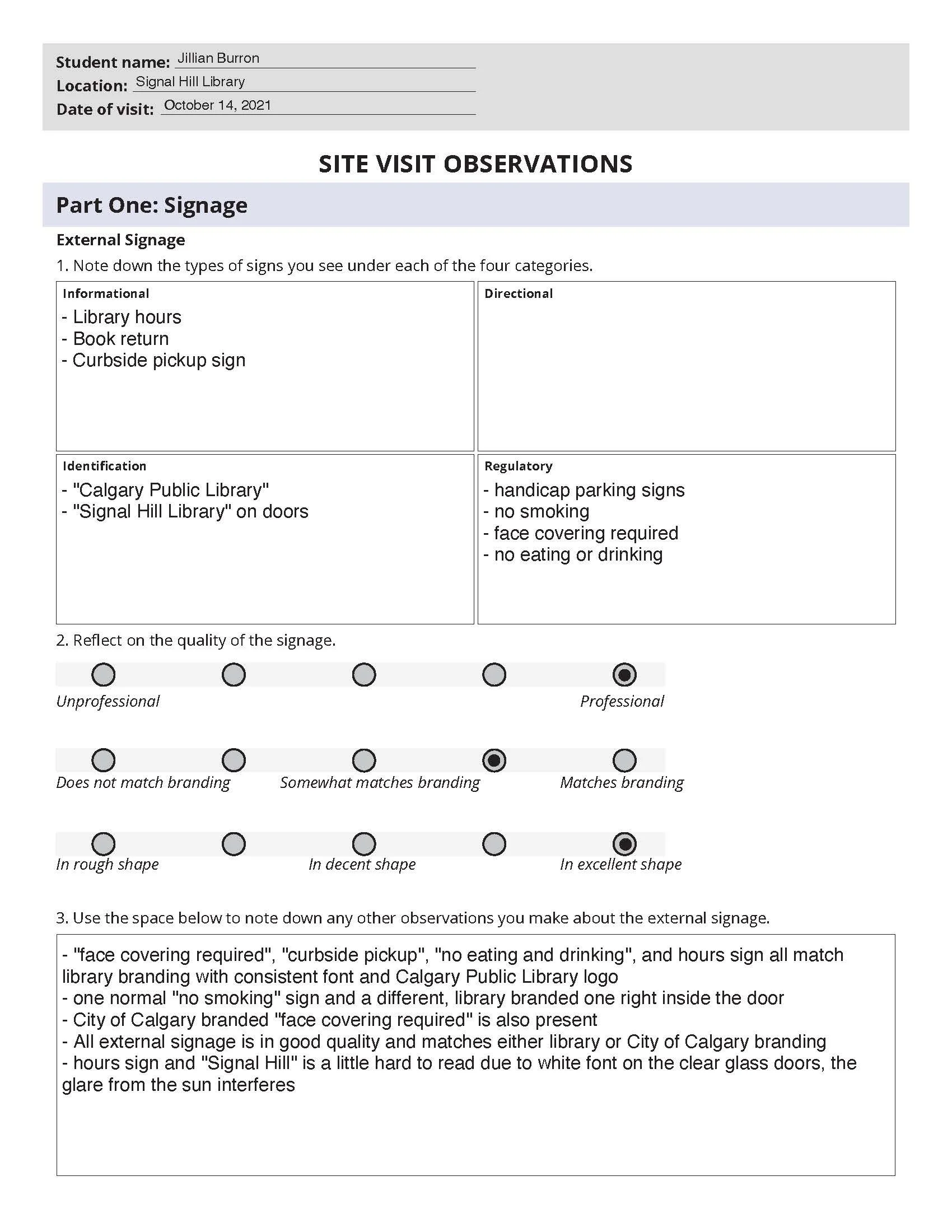
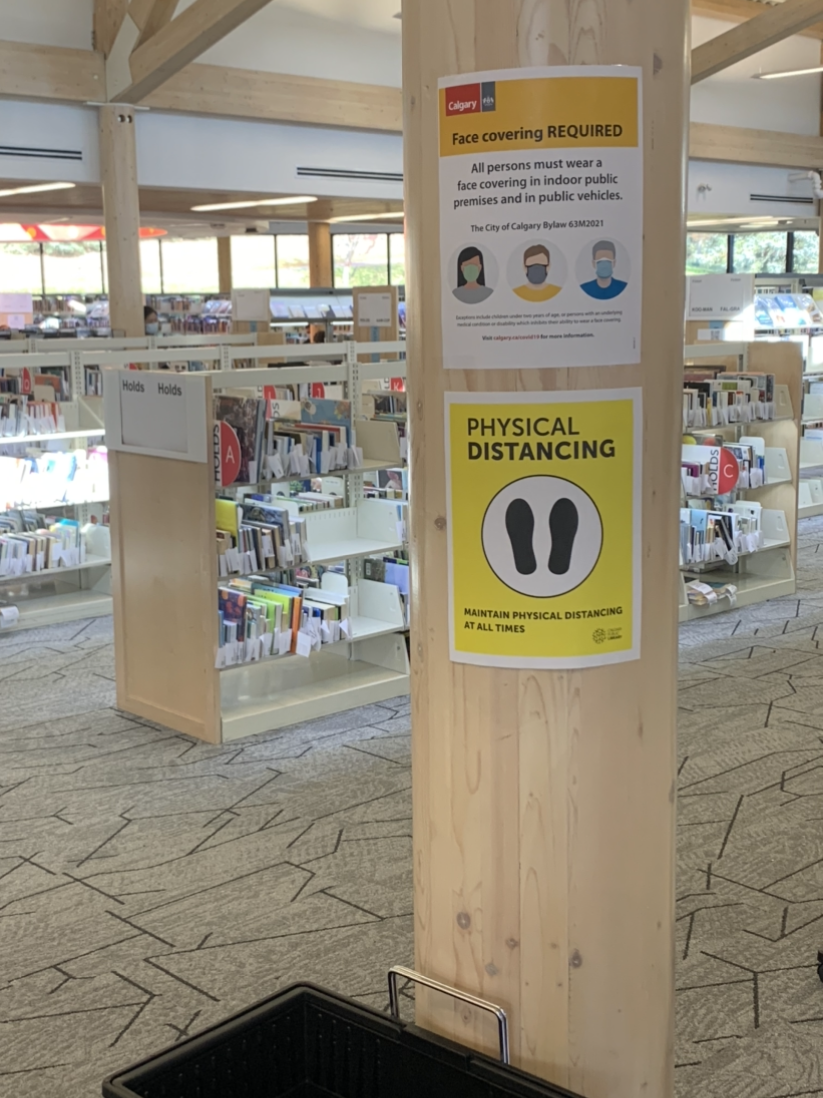
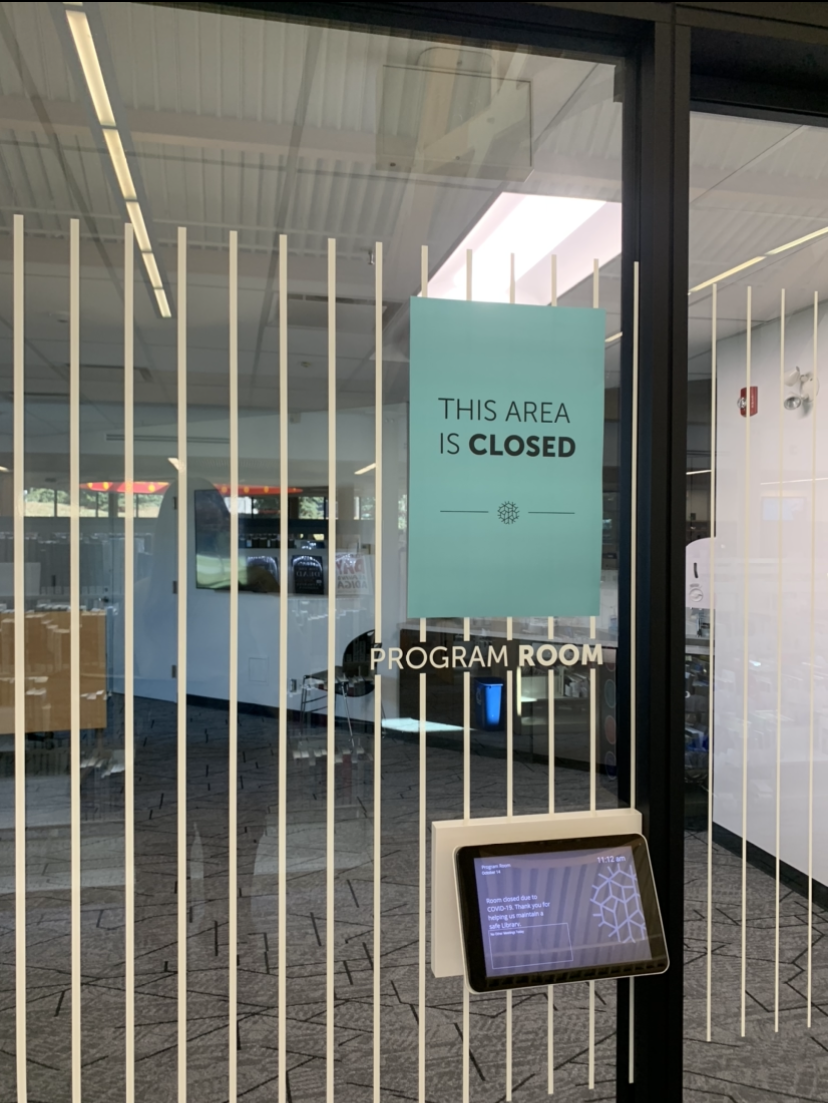
Once we had all completed our site visits, we came together as a team to discuss our findings. We presented our site visit research as well as the photos we took to each other. Then, we discussed our overall experiences at our libraries, what the similarities and differences were between the libraries, what the best and worst examples of signage were, how accessible the spaces were, what the impact of COVID-19 was on our experiences, and based on our research what we thought made good wayfinding.
Key Findings:
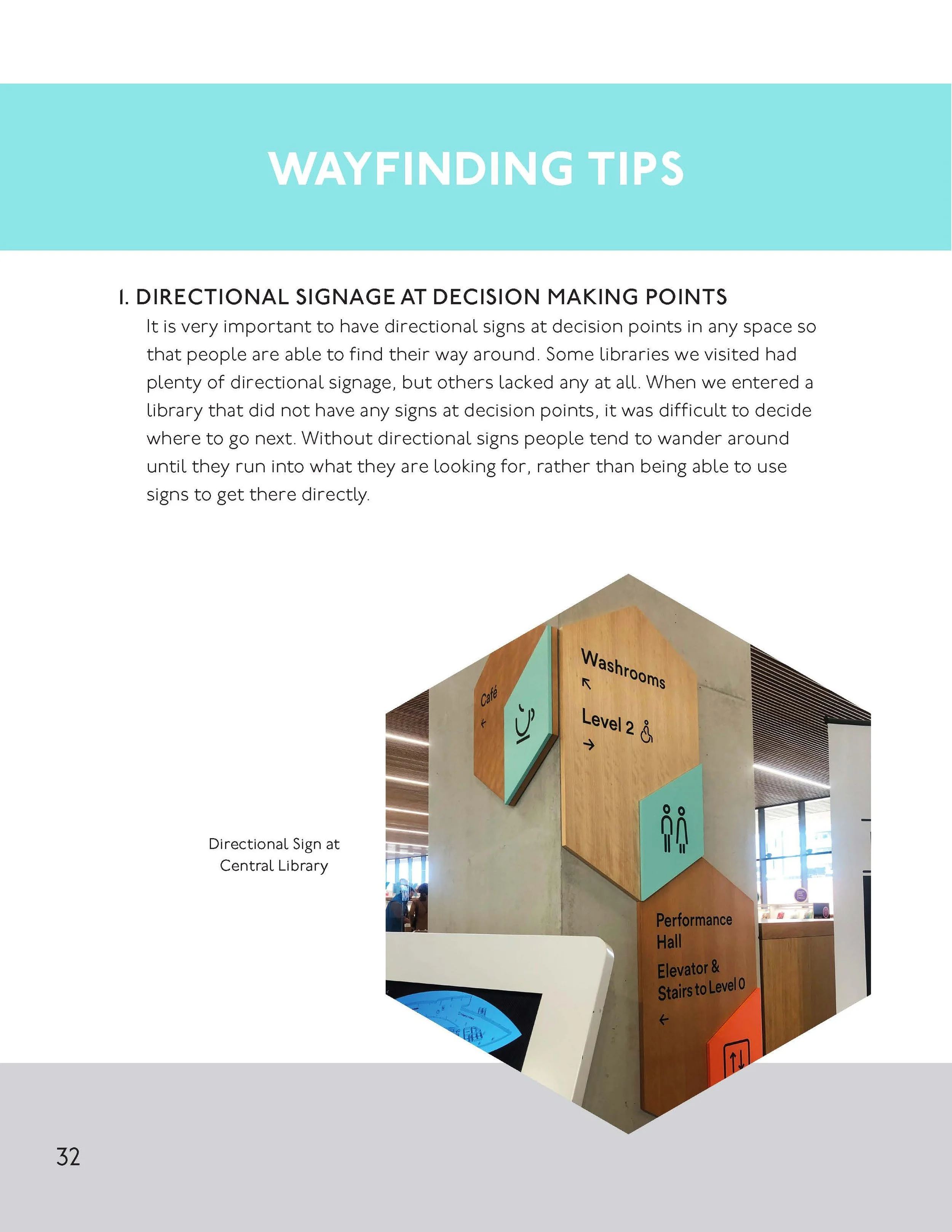
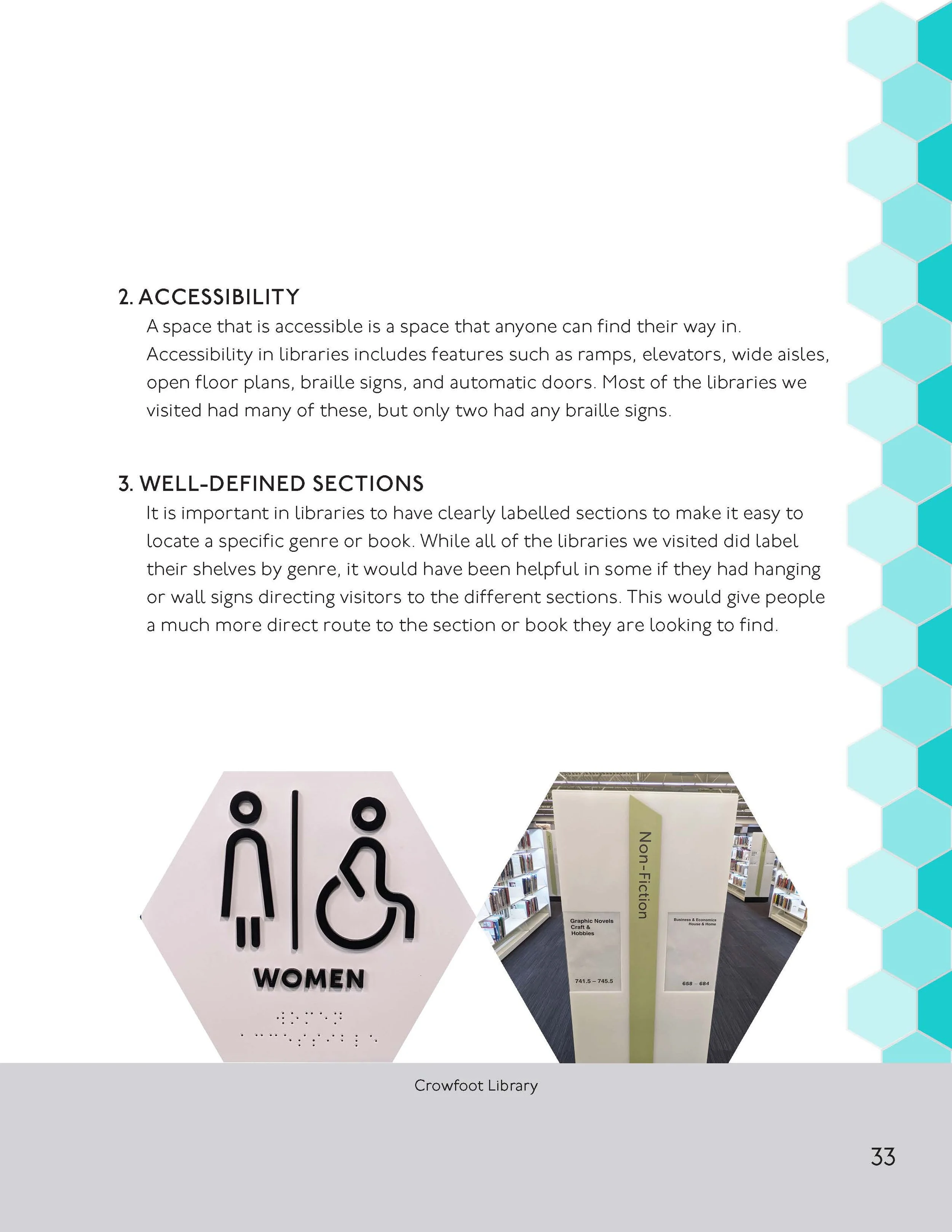
We gained a few insights into the wayfinding experience in Calgary Public Libraries by the end of this project. Firstly, that overall Calgary Public Libraries are fairly easy to navigate, generally accessible, and at the time had adequate COVID-19 safety information displayed and measures in place. However, we found that some libraries did not have effective directional signage, making them more difficult to navigate. We defined three elements that libraries should include for effective wayfinding: directional signage at decision making points, accessibility, and well-defined sections.
We found that the best wayfinding experiences were at libraries where directional signage was posted at points where we had multiple paths to take. At libraries where these kinds of signs were not present, we found ourselves as well as other library visitors wandering around the space as opposed to being able to navigate. This was the biggest issue we identified with the wayfinding at Calgary Public Libraries. In terms of accessibility and well-defined sections, we found all of the libraries to be very accessible and had clearly labelled shelves defining the different sections of books.
This project gave me valuable insights into the concept of wayfinding and how we navigate through the world every day, as well as insights into how spaces can be better designed to make them easily navigable and accessible for everyone.
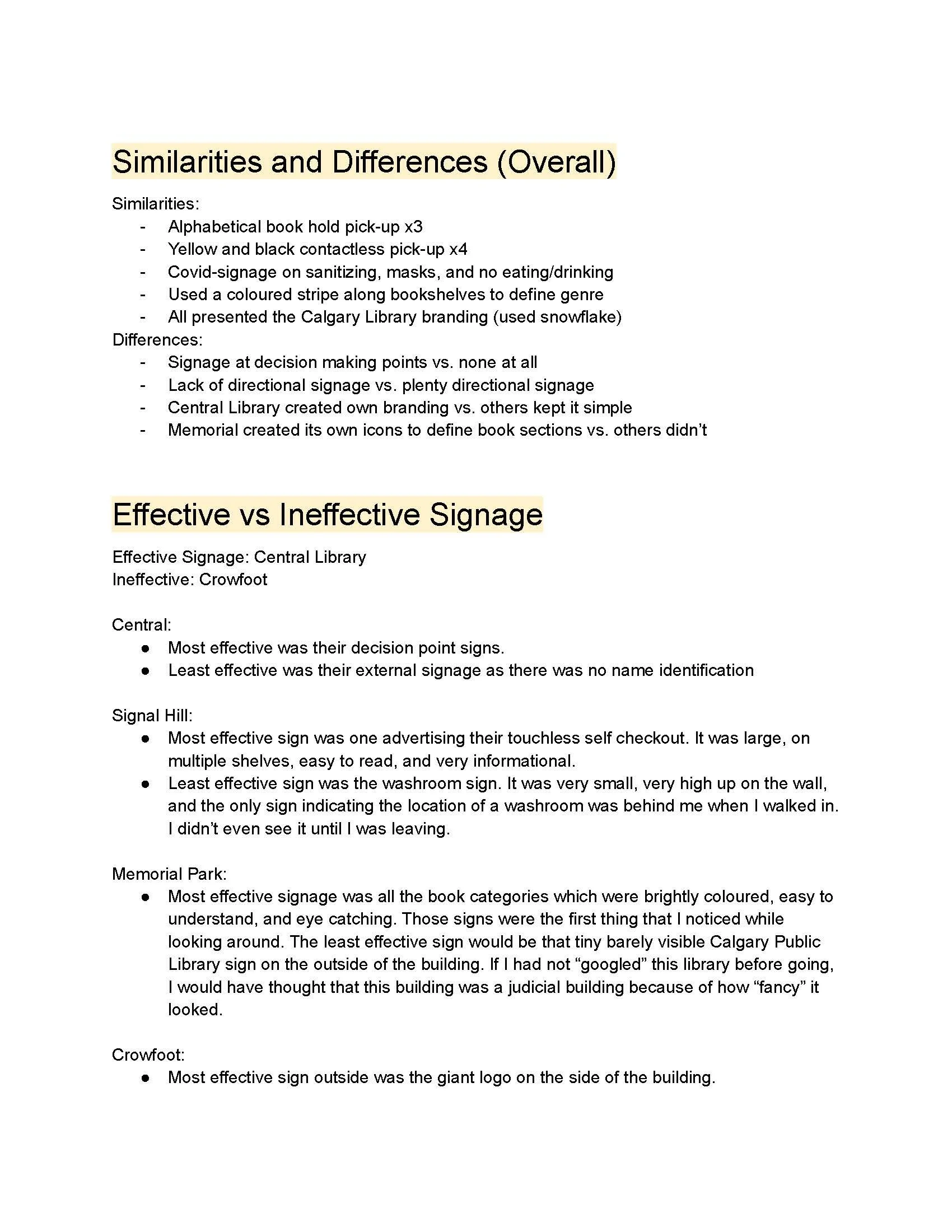
Final Product:
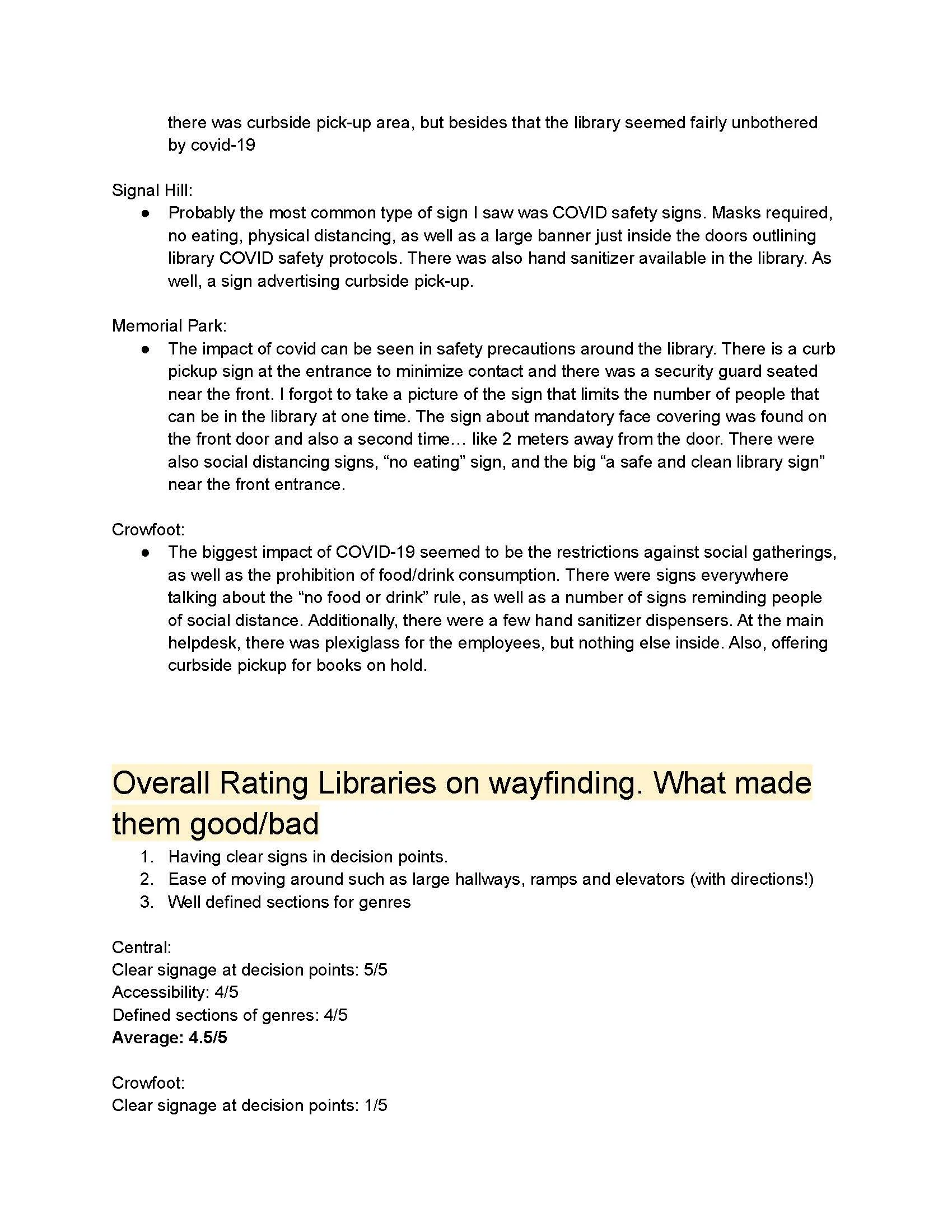
The final products for this project were both a booklet and a slideshow presentation detailing all of our research and conclusions. Myself and one of my teammates collaborated on the booklet design and contents, while the other two members of our group put together our presentation. I was mainly responsible for the written component of the booklet, as well as some layout design, while my partner was responsible for the visual design aspects.