Instructional Design: Technical Description
Goal: Understand the parts of a complicated system, and present them in the form of a technical description that will help a specified user understand the system.
Tools
InDesign, Photoshop
Year
2022
Course
Technical Communications
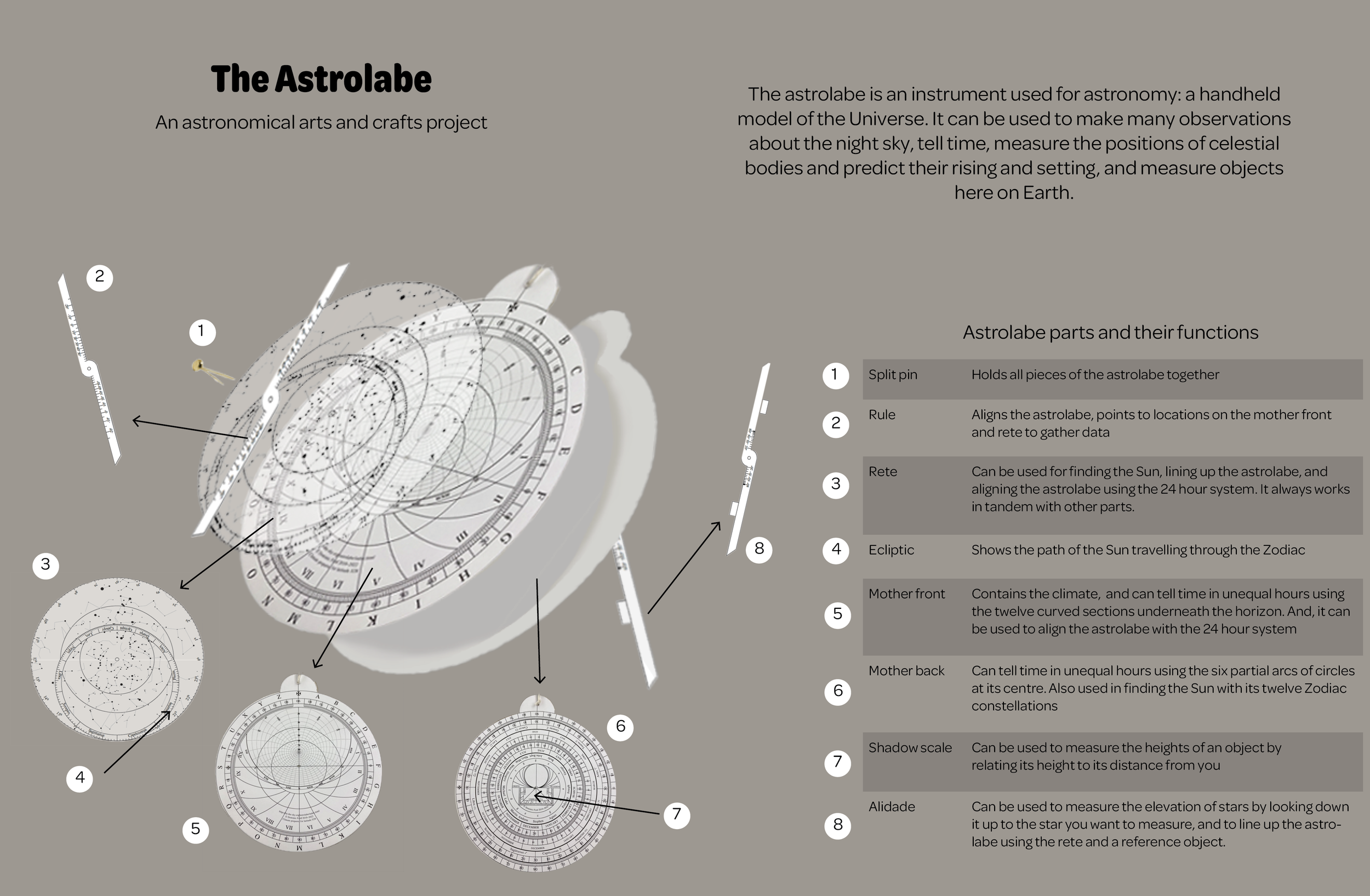
An astrolabe is a very complicated astronomical instrument that is used primarily for determining the elevation of celestial bodies, and identifying the date based on the position of stars in the sky. The challenge of presenting this tool to non-astronomers in a way they could easily understand was addressed in this project.
Design Process
Understanding the System and User:
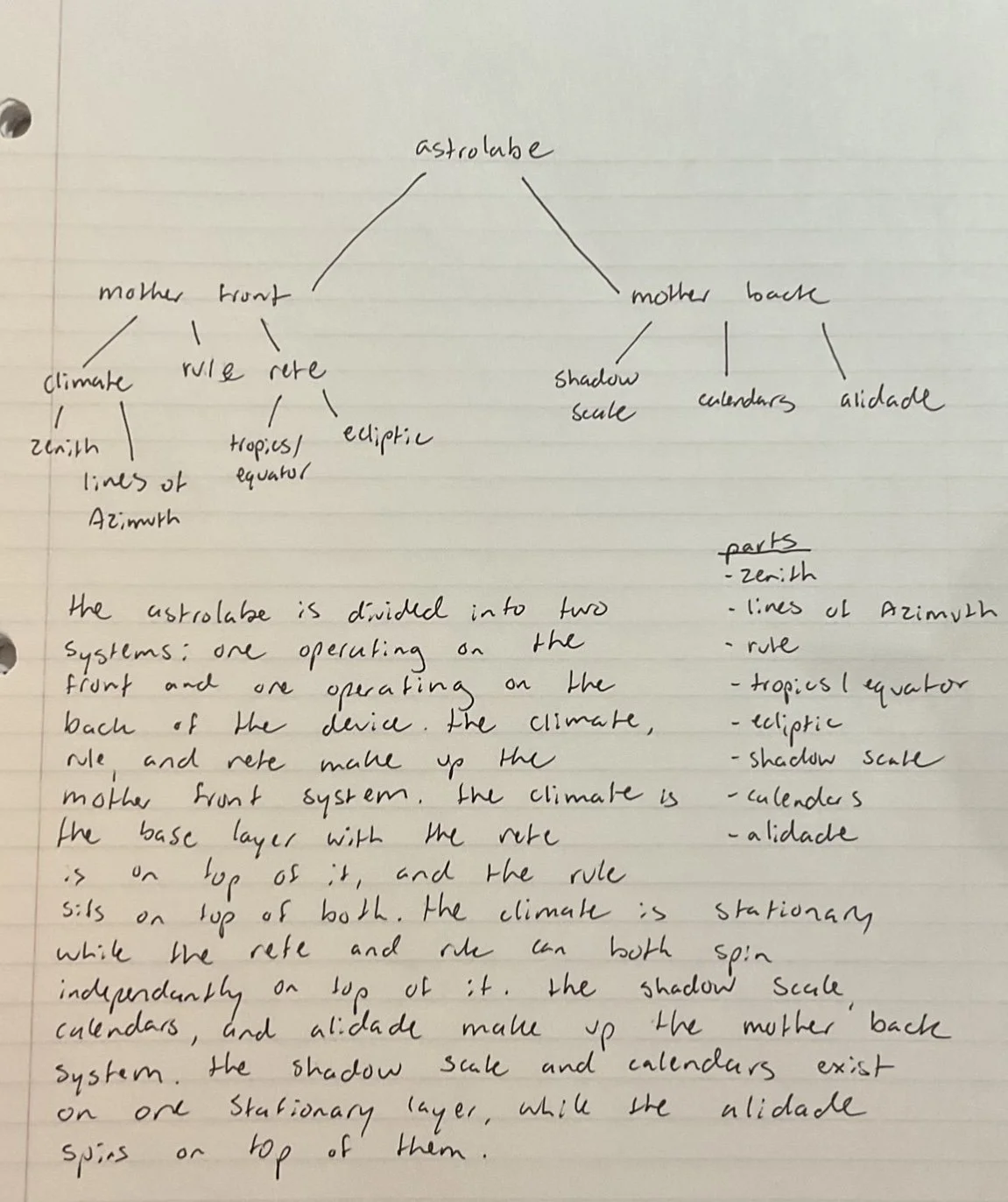
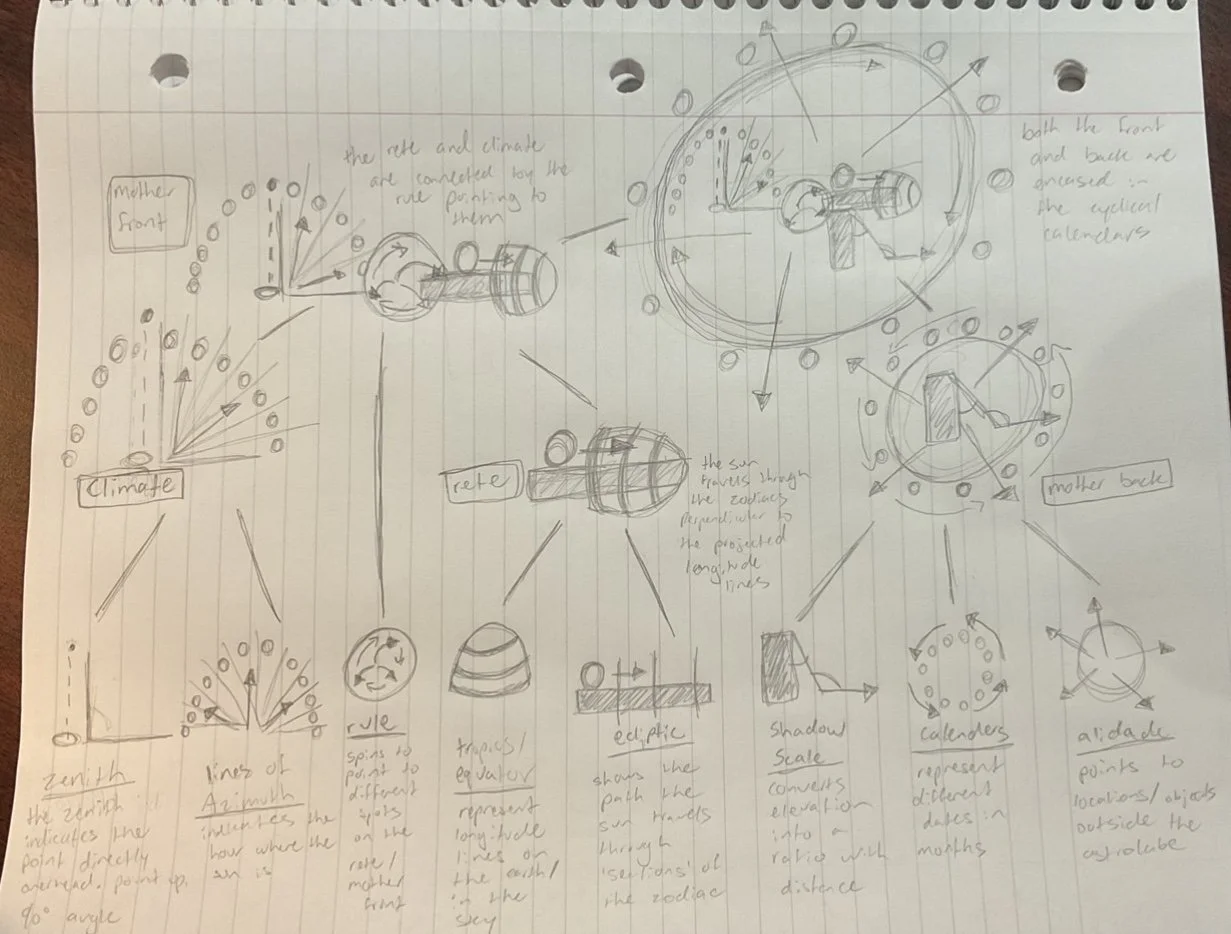
The first step in creating the technical description was to complete a program tree and constructive diagram in order to understand the parts of the astrolabe and how they function in the system. These diagrams helped me understand the parts of the astrolabe so that I had a good understanding of the information I would have to present.
Research:
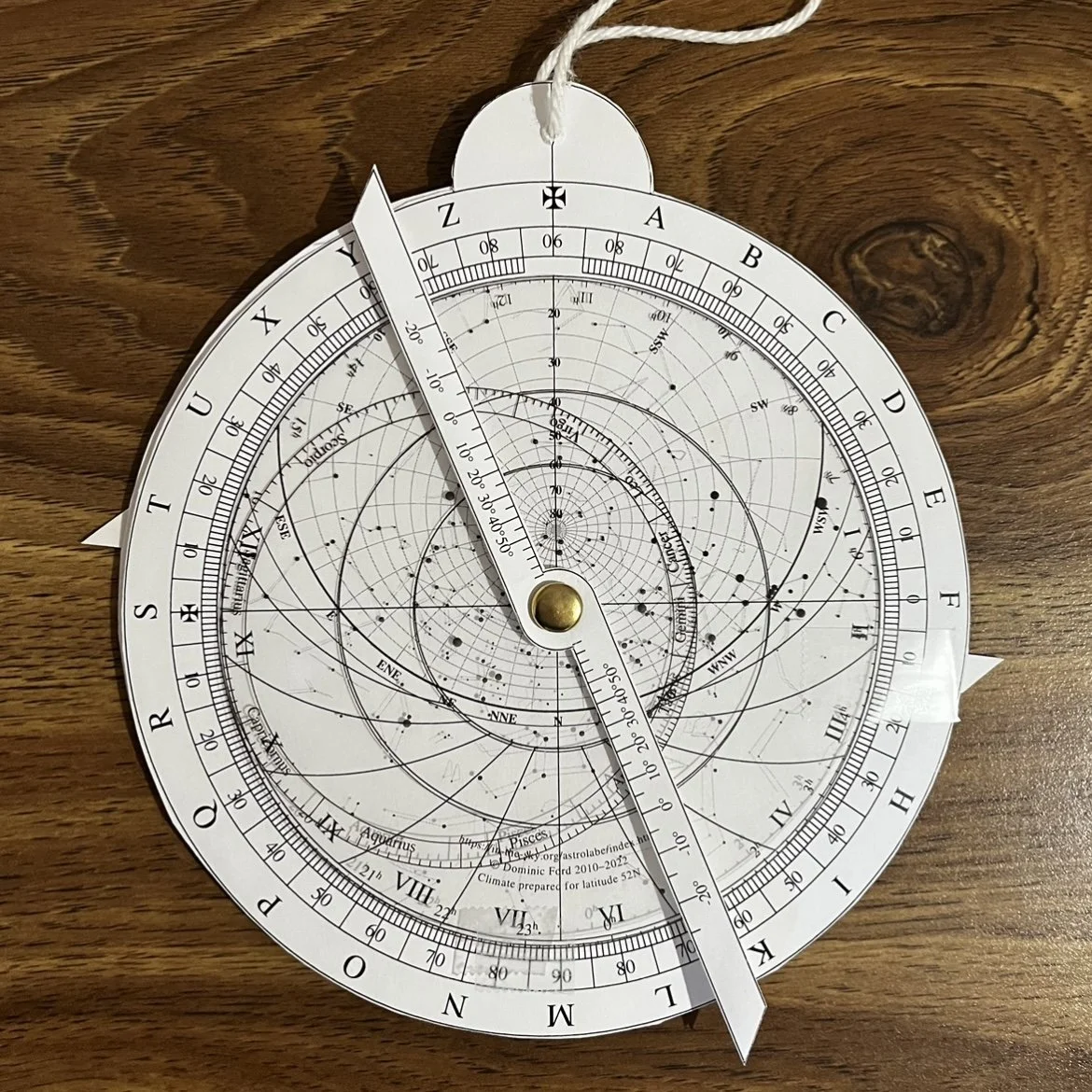
I also constructed my own paper astrolabe as an exercise in understanding its parts and functions
Before starting to design my own technical description, I did some research into what kind of document a technical description is. I conducted precedent research by first collecting a sample of reference technical descriptions. I then identified what kinds of content are included in technical descriptions, and what purpose they typically serve. I analyzed my findings using a matrix to determine which forms of content were most common in my sample, and used this analysis to inform the features I chose for my own astrolabe technical description.
For example, arrow labels are most commonly used to describe part names and functions, and visuals of parts of systems are most often communicated through the use of blowout diagrams, cross sections, or close-ups.
Draft:


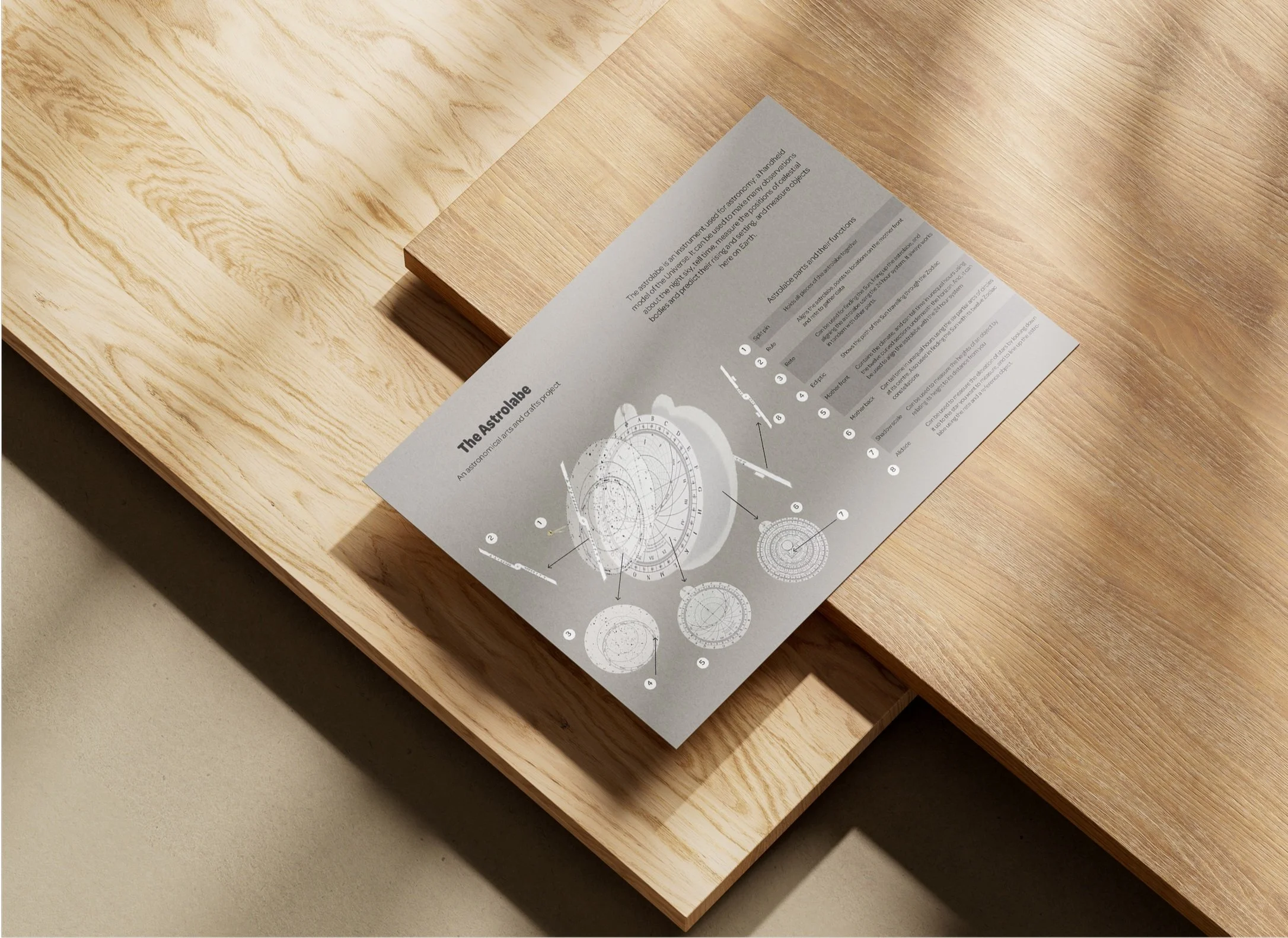
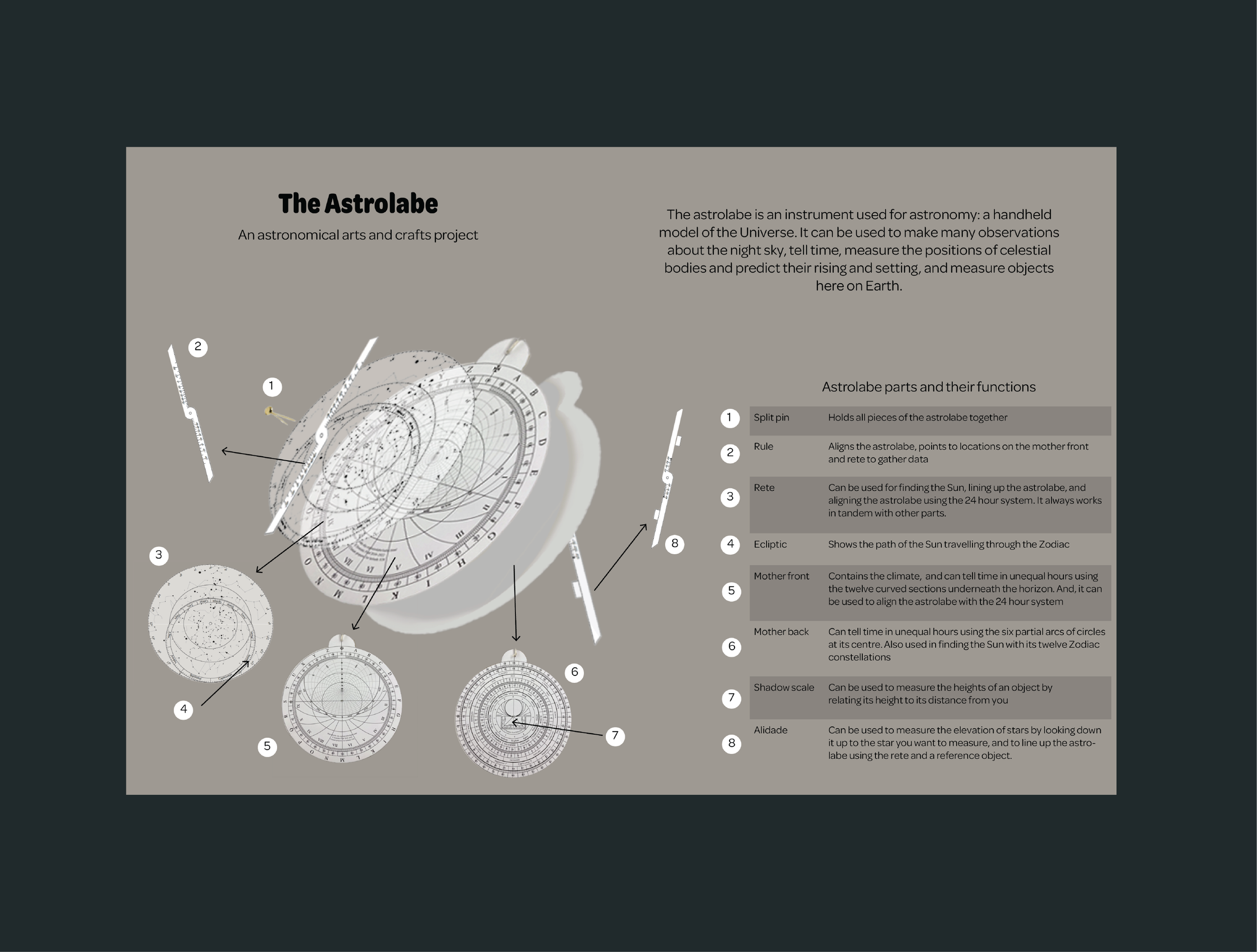
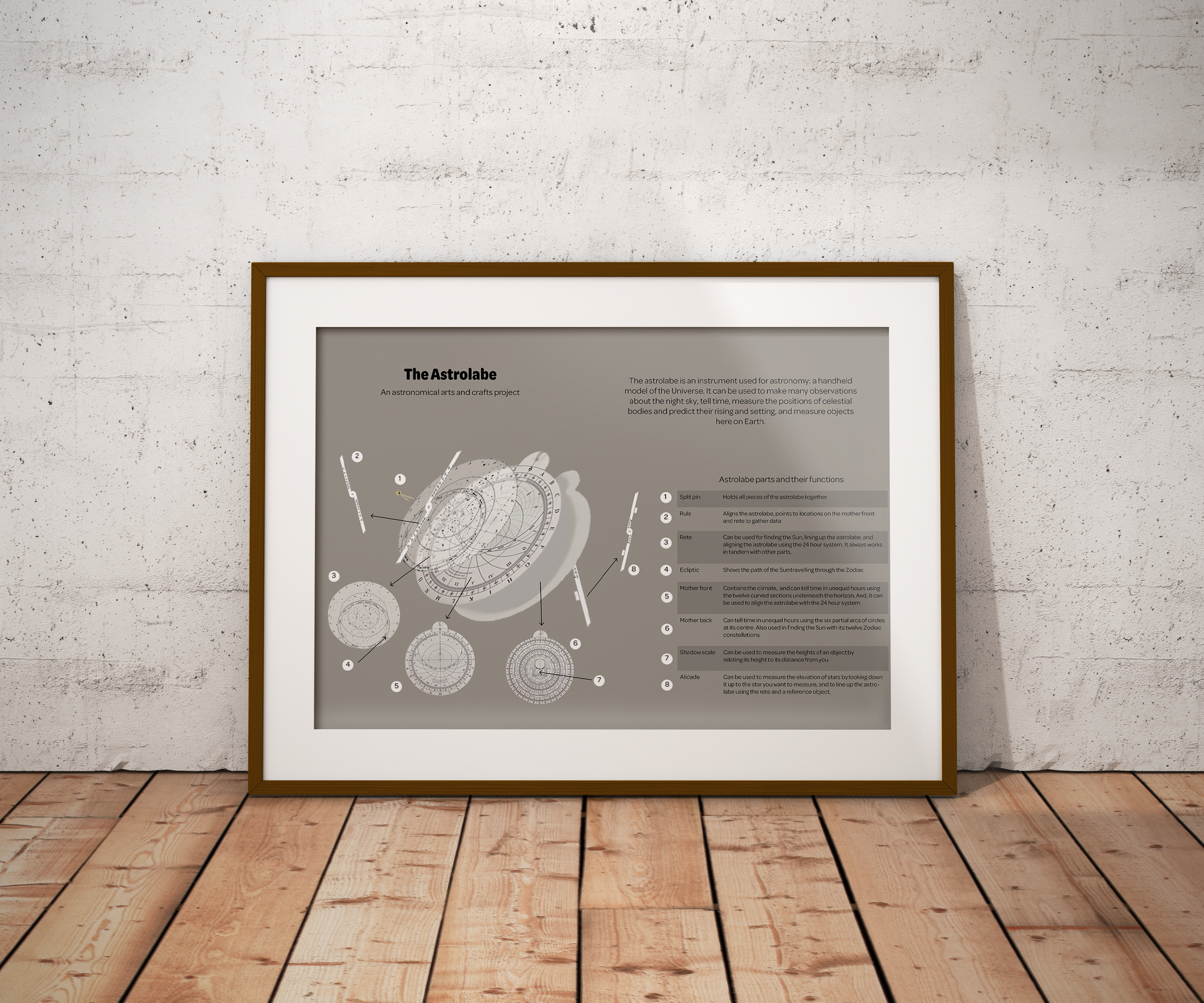
The final product of this project was a fully developed technical description for an astrolabe. The technical description is clear, and does not use too many technical terms or complicated language as it is intended for a user who will mostly use the device as a craft project for children. It gives a short description of what an astrolabe is and what it is used for, and features a blown out image of the parts of the astrolabe with numbered arrow labels coordinating with a table describing the function of each part for easy reference. Based on the analysis I did of a sample of reference technical descriptions, my design utilizes the most common features of technical descriptions and applies them to the astrolabe.
I created the blowout image asset using Photoshop, and the final document was created in Indesign.
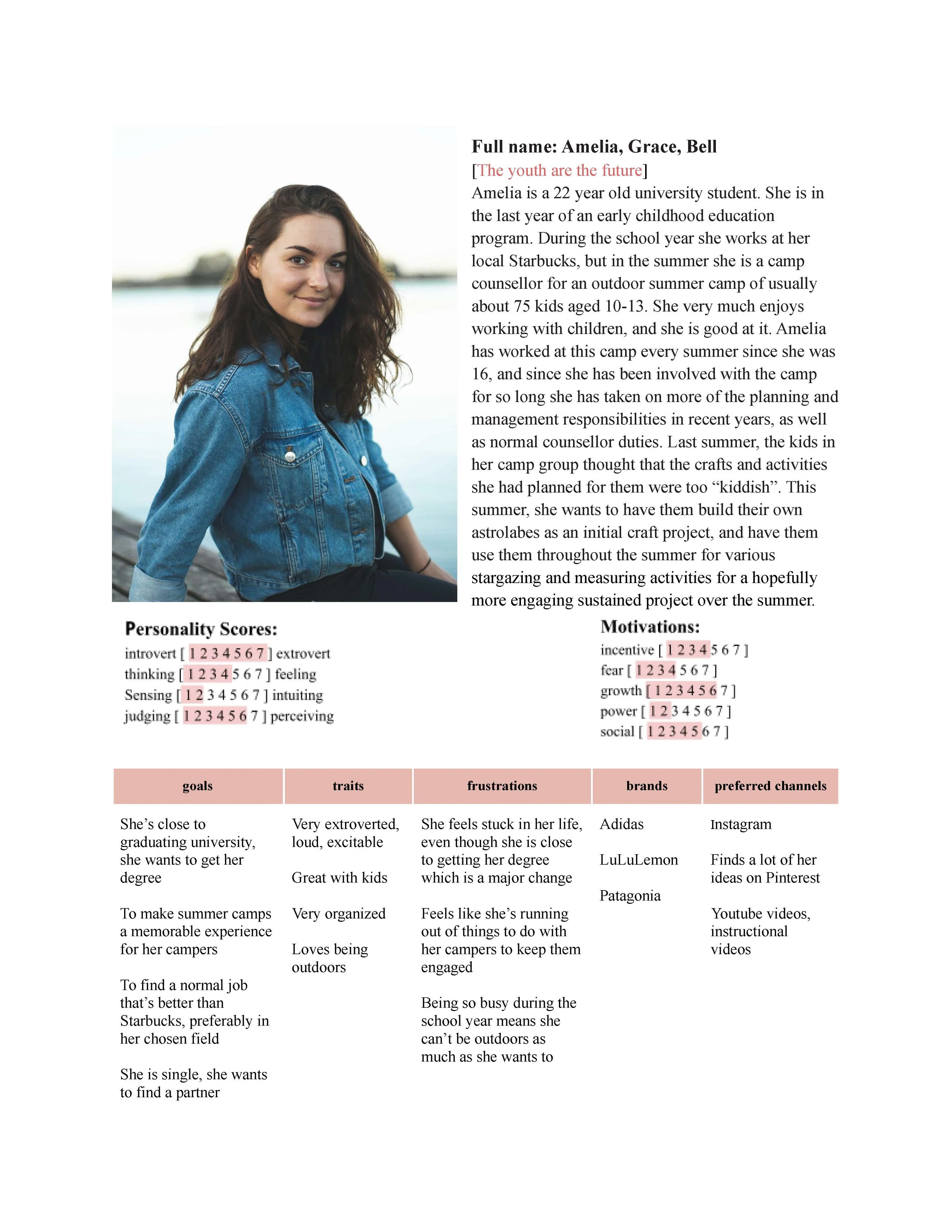
Next, I created a user persona to represent the intended user of my technical description. This exercise was essential because it impacted all of my next steps. As I continued to develop the project, the needs and wants of the user influenced my design choices.
The user I had in mind during this project was a university aged summer camp counsellor, who intended to use the astrolabe as a camp activity.
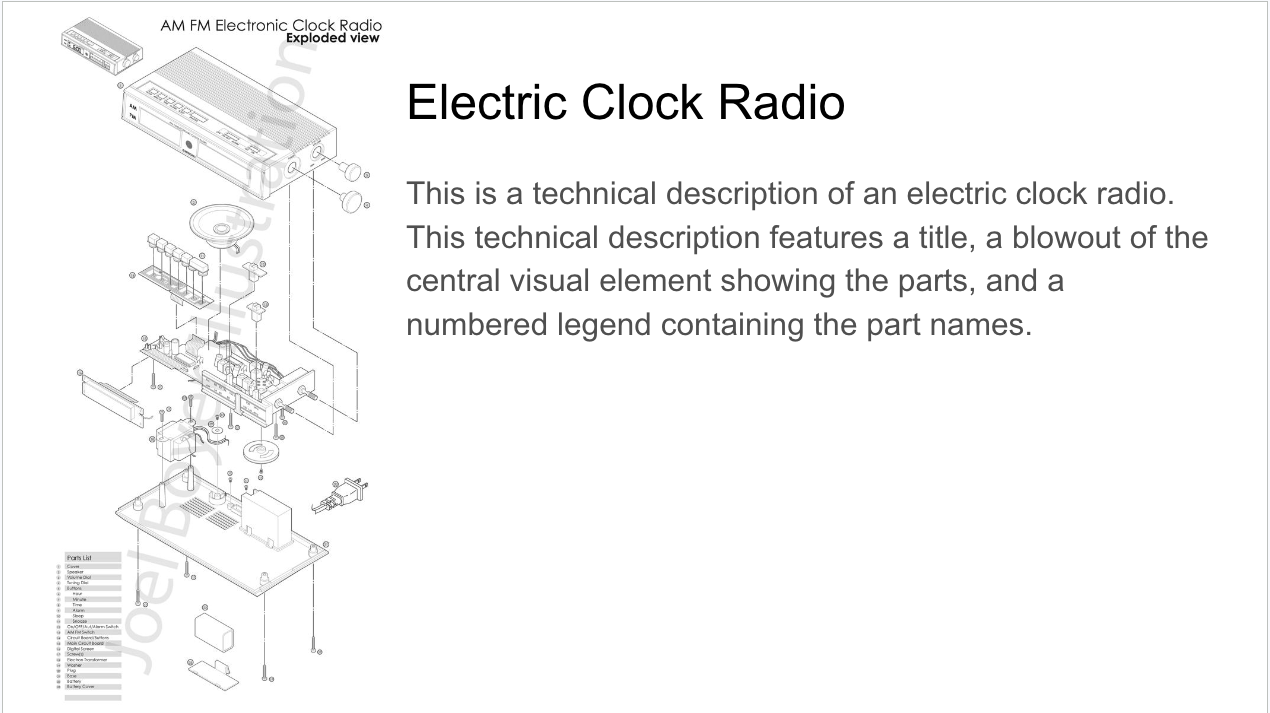
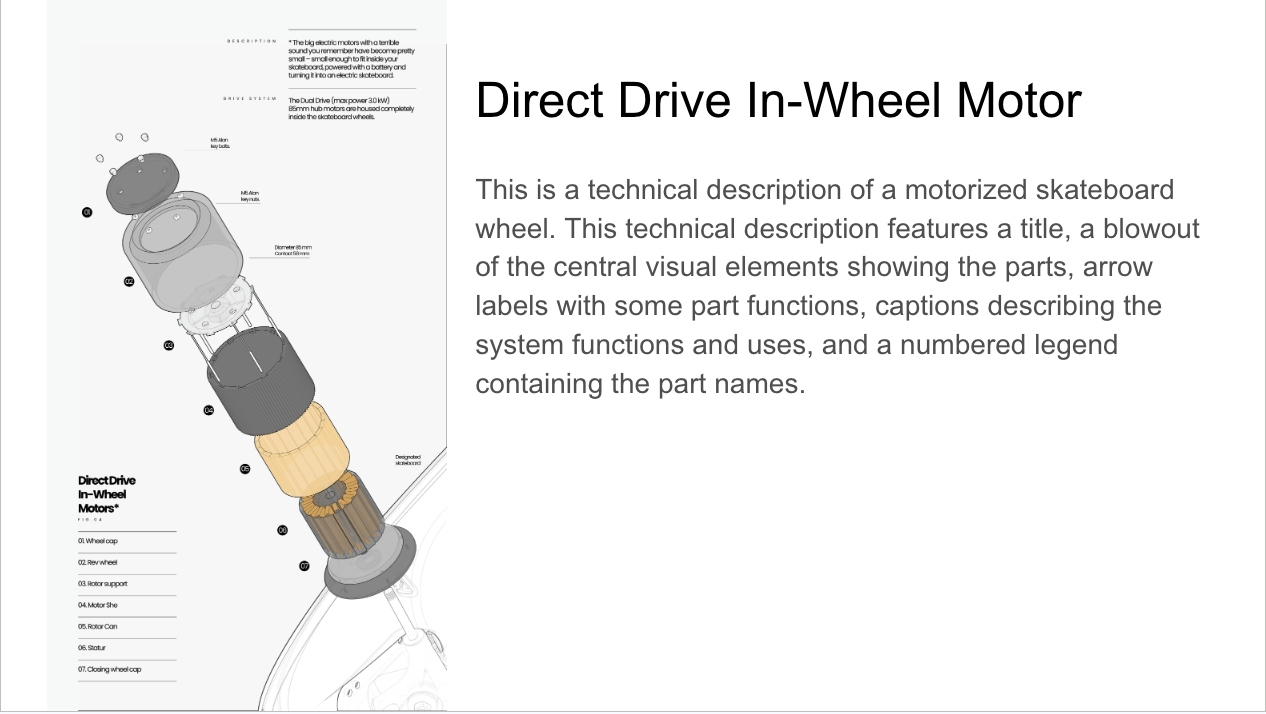
Finally, using the information I had gathered through my program tree, constructive diagram, and sample analysis, I began to prototype my own technical description. I went through a few versions of the blown out image of the astrolabe, as well as the text formatting and overall page layout.
I eventually landed on this layout and an idea of how the blowout diagram would look, which I based the final product off of.
Final Product: